Disclosure: syncfix.cloud is independent and is not affiliated with any provider named on this page. Some links may be affiliate links, which means we may earn a commission at no extra cost to you. It never changes how we rank a product. Read our affiliate disclosure.
What Is a Cloud NAS?
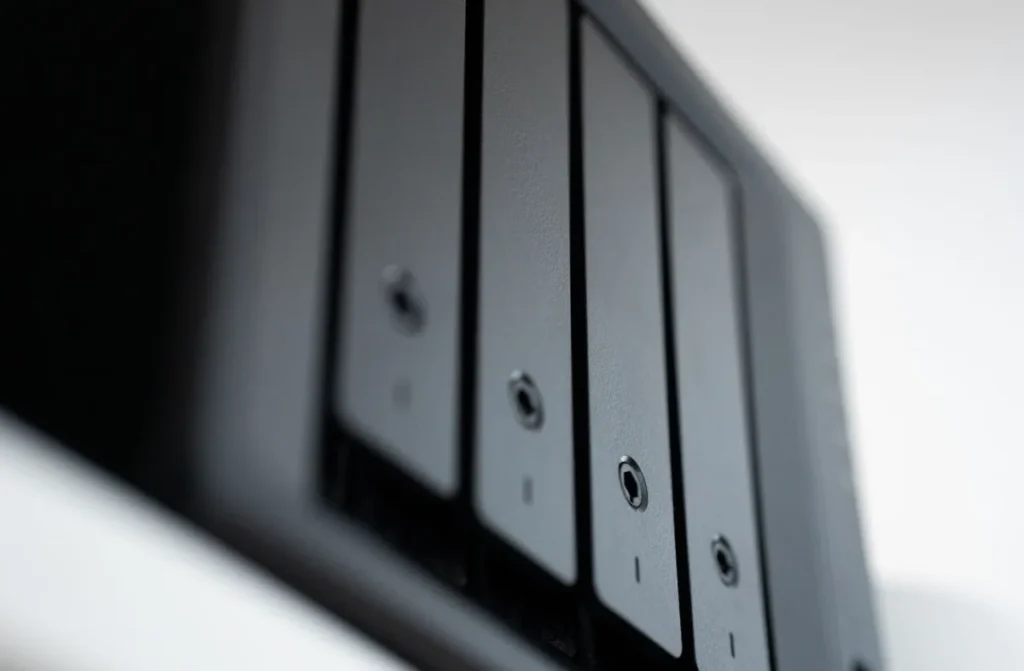
A cloud NAS is a network storage box you own that also behaves like a cloud service: you can reach files remotely, sync them to your computers and phones, and send backups to an offsite cloud. You keep the main copy at home and use the cloud for remote access and an offsite copy.
| Platform | Own sync app | Cloud sync app | Offsite backup app | Remote access | Best for |
|---|---|---|---|---|---|
| Synology DSM | Synology Drive | Cloud Sync (OneDrive, Google Drive, Dropbox and more) | Hyper Backup | QuickConnect or your own domain | Easiest all-in-one home setup |
| QNAP QTS | Qsync | Hybrid Backup Sync (sync jobs) | Hybrid Backup Sync 3 | myQNAPcloud | Power users who want more hardware options |
| TrueNAS | Apps such as Syncthing or Nextcloud | Cloud Sync tasks | Cloud Sync tasks, replication | Your own VPN or reverse proxy | Technical users, ZFS fans |
| DIY server + Nextcloud | Nextcloud clients | External storage, rclone | rclone, restic or similar | Your own domain and TLS | Full control and privacy |
| Any NAS + Syncthing or Resilio | Peer-to-peer apps | Not needed | Pair with a cloud backup | Peer-to-peer relays | Private device-to-device sync |
This is our hub for NAS and self-hosted sync. It links to every guide in the cluster.
How We Compared Cloud NAS Options
We focused on what matters for keeping files safe and reachable, not raw hardware speed:
- Sync to your devices: quality of desktop and mobile apps.
- Cloud integration: which public clouds the NAS can sync or back up to.
- Offsite backup: encryption, versioning and restore options.
- Remote access: how easy and how secure.
- Maintenance: updates, alerts and how much you must manage yourself.
The comparison uses each vendor’s documentation, checked in October 2026, and our experience setting up home NAS systems. No vendor paid for placement.
Short Verdicts
Synology: the easiest cloud NAS
Synology’s software makes a NAS feel like a private cloud. Synology Drive syncs files to Windows, Mac and phones. Cloud Sync links the NAS to public clouds, and Hyper Backup sends versioned, encrypted backups to cloud storage. For most homes, this is the shortest path to a working setup.
QNAP: more hardware choice
QNAP offers Qsync for device sync and Hybrid Backup Sync 3 for backups and cloud sync jobs. It gives more hardware variety and settings, with a steeper learning curve.
TrueNAS: for people who like control
TrueNAS uses the ZFS file system, with snapshots that protect against accidental deletion. Cloud Sync tasks can send data to cloud storage providers. Expect more manual setup.
Nextcloud: your own Dropbox
Nextcloud gives you a Dropbox-like experience on your own server or NAS, with web, desktop and mobile apps. You manage updates and security. Read self hosted file storage.
Get the free sync troubleshooting checklist
One page with the settings and checks that prevent most sync and backup problems, plus alerts when a major service has an outage.
Syncthing and Resilio on a NAS
Peer-to-peer tools turn a NAS into an always-on sync peer, so laptops sync with it whenever they are online. See Resilio Sync NAS and Syncthing cloud.
A NAS Is Not a Backup by Itself
A single NAS at home can fail, be stolen, or be hit by ransomware through a connected PC. In my experience, people trust RAID too much. RAID protects against one drive failing; it does not protect against deletion, corruption or fire.
Keep an offsite copy. Our guide on NAS cloud backup walks through sending NAS data to the cloud.
Secure Remote Access
- Keep the NAS software updated and turn on automatic security updates.
- Use two-step verification on NAS admin accounts.
- Disable the default admin account where possible.
- Prefer a VPN or the vendor’s relay service over opening ports to the internet.
- Turn on snapshots so you can roll back after ransomware.
Who Each Option Suits
- Families and small offices who want it simple: Synology.
- Tinkerers who want more hardware choice: QNAP.
- Technical users who value ZFS snapshots: TrueNAS.
- Privacy-first users with skills: Nextcloud on your own hardware.
- Device-to-device sync with no cloud: any NAS with Syncthing or Resilio.
Guides in This Cluster
- Sync your NAS with PCs and clouds: NAS sync.
- Peer-to-peer tools: Resilio Sync, Resilio Sync NAS and Syncthing cloud.
- Comparing them: Resilio Sync vs Syncthing.
- Run your own cloud: self hosted file storage.
Frequently Asked Questions
Is a cloud NAS cheaper than cloud storage?
Over several years it often is, especially for large photo and video libraries, because you buy the hardware and drives once instead of paying monthly for space. You still pay for electricity, replacement drives and an offsite backup. For small amounts of data, a cloud plan is usually cheaper and simpler.
Can a NAS sync with OneDrive or Google Drive?
Yes. Synology Cloud Sync and QNAP Hybrid Backup Sync can connect a NAS to OneDrive, Google Drive, Dropbox and other services. You can sync both ways or copy one way. Use one-way copy for backups so deletions on the NAS do not spread to the cloud copy.
Is it safe to access my NAS from the internet?
It can be, with care. Keep the NAS software updated, use strong passwords and two-step verification, disable default accounts and avoid exposing admin pages directly. A VPN or the vendor’s relay service is safer than opening ports. Turn on snapshots so you can recover from ransomware.
Do I still need cloud backup if I have a NAS?
Yes. A NAS at home protects against a single drive failing, but not against fire, theft, ransomware or accidental deletion that syncs. Send an encrypted, versioned backup of important folders to cloud storage. This follows the 3-2-1 rule of keeping one copy offsite.
What is the easiest NAS for beginners?
Synology is widely considered the easiest for beginners because its software bundles sync, cloud connection, backup and remote access in a single interface with guided setup. QNAP and TrueNAS offer more flexibility but expect more configuration. Choose based on how much time you want to spend managing it.
Keep your files safe and in sync
Join the newsletter for the free troubleshooting checklist and outage alerts. Facing a specific error? Tell us about it and we will point you to the right fix.
Sources